

Check out Popular Articles
Employee Directory
HRM Platforms and Transforming Organizational Workflows
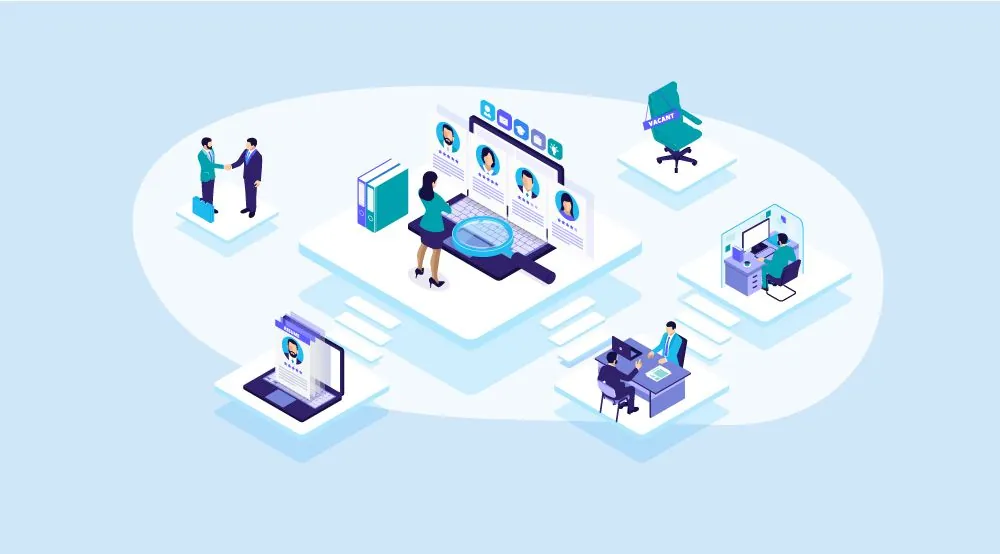
Human Resource Management (HRM) is a core function in every organization, responsible for managing people, enhancing employee performance, and aligning workforce capabilities with organizational goals. In today’s digital era, traditional HRM practices are rapidly evolving with the adoption of HRM platforms—technology-driven systems that automate, integrate, and optimize human resource processes. Together, HRM and HRM platforms play a crucial role in transforming organizational workflows, improving efficiency, transparency, and strategic decision-making. Understanding Human Resource Management (HRM) Human Resource Management refers to the strategic approach to managing an organization’s workforce effectively and efficiently. It encompasses a wide range of activities, including recruitment and selection, training and development, performance management, compensation and benefits, employee relations, and compliance with labor laws. The primary objective of HRM is not only to hire and retain talented employees but also to create a productive work environment where employees can grow, remain engaged, and contribute meaningfully to organizational success. Modern HRM has shifted from administrative and operational tasks toward a more strategic role, focusing on talent development, organizational culture, and long-term workforce planning. What Are HRM Platforms? HRM platforms, also known as Human Resource Information Systems (HRIS) or Human Capital Management (HCM) systems, are digital solutions designed to manage HR processes through a centralized platform. These systems integrate various HR functions into one unified interface, allowing organizations to automate repetitive tasks and store employee data securely. Common features of HRM platforms include employee records management, payroll processing, attendance and leave tracking, recruitment management, performance appraisal systems, learning and development modules, and analytics dashboards. Popular HRM platforms include SAP SuccessFactors, Workday, BambooHR, Oracle HCM, Zoho People and now Normativo! Transformation of Organizational Workflow Through HRM Platforms HRM platforms significantly transform organizational workflows by streamlining processes and reducing manual intervention. One of the most notable changes is automation. Tasks such as payroll calculations, attendance tracking, leave approvals, and benefits administration can be completed automatically, saving time and minimizing human error. This allows HR professionals to focus on strategic initiatives rather than routine administrative work. Another key transformation is improved data accessibility and accuracy. HRM platforms centralize employee information, making it easily accessible to authorized users across departments. Managers can quickly review performance data, attendance records, or training progress, enabling faster and more informed decision-making. HRM platforms also enhance communication and collaboration within organizations. Employee self-service portals allow staff to update personal information, apply for leave, access payslips, and enroll in training programs without direct HR intervention. This transparency improves employee satisfaction and reduces workflow bottlenecks. From a strategic perspective, HR analytics and reporting tools embedded in HRM platforms provide valuable insights into workforce trends, such as employee turnover, engagement levels, skill gaps, and productivity patterns. These insights support evidence-based decision-making and help organizations align HR strategies with business objectives. Impact on Organizational Efficiency and Culture By optimizing workflows, HRM platforms contribute to higher organizational efficiency and consistency. Standardized processes ensure compliance with policies and regulations while reducing operational risks. Moreover, the adoption of digital HR systems promotes a culture of accountability, continuous learning, and performance-driven growth. HRM platforms also support remote and hybrid work models by enabling cloud-based access to HR services. This flexibility has become increasingly important as organizations adapt to globalized and digitally connected work environments. Conclusion Human Resource Management remains a vital function for organizational success, but its effectiveness is significantly enhanced through the use of HRM platforms. By automating processes, improving data management, and enabling strategic workforce planning, HRM platforms transform organizational workflows and redefine how HR contributes to business performance. Organizations that successfully integrate HRM platforms gain a competitive advantage through improved efficiency, better employee experiences, and stronger alignment between human capital and organizational goals.

Team Normativo
14 / 01 / 2026
Read More
Employee Directory
Potential of ‘The Magic Triangle’: CRM, ERP and BI Integration
The Magic Triangle Methodology is a concept that suggests there must be an effective link between Customer Relationship Management ( CRM ), Enterprise Resource Planning ( ERP ) and Business Intelligence ( BI ) systems for efficient business operations. These three core components are essential for business success in today’s highly competitive markets, as they enable organizations to manage data effectively and streamline their processes. In order to gain maximum efficiency from these systems, it is important that the CRM, ERP and BI elements of the system all integrate seamlessly with each other. For instance, an integrated system would allow customer data stored in the CRM database to be retrieved via a BI query; likewise, information generated by the ERP module could also be accessed through a BI query or report. By linking all three together into one unified platform, organizations can utilize shared resources across their entire operation more efficiently – leading to cost savings and improved business performance overall. Having this type of integration also makes it easier for businesses to get better insight into their customers’ needs and behaviors so they can create products or services tailored towards those requirements much faster than if they had only used standalone CRM or ERP solutions. Additionally, having access to real-time data analysis enables companies to make smarter decisions on operational matters such as inventory levels or production cycles which can significantly reduce costs while improving customer service quality at the same time. However, creating an effective ‘magic triangle’ of IT systems isn’t always easy – especially since different software programs have varying levels of compatibility between them. Organizations need experienced professionals who understand both how these different components interact with each other but also how they fit within existing company structures & processes in order provide complete coverage over the full circle of sales operations & control activities. This is where Normatech plays a crucial role. As a company specializing in CRM, ERP and BI integrations, Normatech helps businesses establish seamless communication between their systems, ensuring that data flows smoothly across departments and platforms. With a deep understanding of enterprise applications and business intelligence, Normatech enables companies to turn raw data into actionable insights that drive smarter decisions and greater efficiency. Implementing such a complex ecosystem requires a partner who understands the underlying science of data flow. Normatech offers a unique combination of theoretical depth and practical expertise. The “Magic Triangle” methodology was pioneered by Normatech’s CEO and Founder, Ing. George Maisuradze . His framework is backed by his scientific articles on the integration of CRM, ERP, and BI systems. Under his leadership, Normatech ensures your infrastructure is not just connected, but harmonized – turning his research into a validated framework for long-term growth and operational excellence.
-1768290471331-441351055.webp)
Team Normativo
13 / 01 / 2026
Read More
Employee Directory
10 HR Trends in 2026 That Growing Companies Can't Afford to Ignore
Most HR problems in small and mid-sized companies aren't caused by a lack of effort. They're caused by systems — or the absence of them — that make it hard for the right people to act at the right time with the right information. As companies grow through 2026, that gap between intention and execution is getting harder to paper over. The HR trends shaping this year aren't abstract predictions for enterprise organizations. They're structural signals that are already creating friction for growing teams — and clarity for the ones getting ahead of them. Here are 10 HR trends in 2026 that matter — not because they're new, but because they're becoming the difference between HR that holds a company back and HR that helps it move forward. 1. Decision ownership is replacing approval chains The old model — submit a request, wait for it to move through a chain — is breaking down. Not because companies lack approvers, but because no one is sure who the right approver is, in what order, or by when. In 2026, forward-thinking HR teams are shifting from loose approval processes to structured decision ownership: clear assignment of who holds responsibility for each HR action, with explicit sequencing and timelines. The result isn't faster bureaucracy — it's the elimination of the ambiguity that causes decisions to stall in the first place. 2. HR data trust is becoming a strategic priority Most SMBs don't have a data problem. They have a trust problem. Employee records live in spreadsheets, contract versions exist across email threads, and leave balances are tracked in tools that don't talk to each other. By 2026, companies are recognizing that fragmented HR data doesn't just create administrative overhead — it creates a culture where managers double-check everything and still feel unsure what they're looking at. The shift toward a single, permissioned, auditable source of HR truth isn't a technology upgrade. It's a foundational change in how HR decisions get made. 3. Execution reliability is emerging as an HR discipline HR processes don't fail because people don't care. They fail because they depend on someone remembering to follow up. Onboarding steps get missed. Offboarding checklists are left half-complete. Contract renewals surface only when someone notices the date has passed. In 2026, execution reliability — the ability to make HR processes predictable, traceable, and automatic — is emerging as a measurable HR capability. Companies that build this into their systems spend less time chasing and more time operating. 4. Structured onboarding is being treated as a retention tool The research on early attrition consistently points to the same window: the first 90 days. Yet most SMB onboarding still relies on informal handoffs, verbal instructions, and documents shared via email. In 2026, onboarding is being recognized not as a compliance exercise but as a direct input to retention and time-to-productivity. Companies that build structured onboarding — with assigned tasks, defined timelines, and clear role context before day one — are seeing measurable differences in how quickly new hires become effective contributors. 5. Leave management is being redesigned around transparency, not control The way teams experience leave management has changed. Employees want visibility — into their own balances, into who else is away, into the status of their request. Managers want confidence that approvals won't create coverage gaps. HR teams want to stop being the person in the middle of every back-and-forth. The trend in 2026 is toward leave systems built on shared visibility rather than top-down control: automated workflows, shared calendars, and clear approval logic that removes ambiguity for everyone involved. 6. Org clarity is being prioritized as companies scale When a company has 15 people, everyone knows who does what. At 40, that starts to break down. At 80, it's a real operational problem. In 2026, growing companies are investing in organizational clarity — not org charts as static documents, but as living structures that reflect actual reporting lines, team composition, and approval authority. When everyone can see who is responsible for what, the cost of confusion drops. Escalations happen faster. New hires orient more quickly. Decisions land with the right people. 7. HR task management is being separated from general project tools Many SMBs manage HR tasks inside general project management tools — Trello boards, Notion pages, shared spreadsheets. These work until they don't. HR tasks carry context that generic tools don't accommodate: deadlines tied to employee lifecycle events, privacy requirements, assignment logic linked to roles rather than individuals. The trend in 2026 is toward HR-specific task management that connects directly to onboarding flows, offboarding checklists, and recurring HR processes — so nothing falls through the gap between tools. 8. Document security is moving from storage to governance Storing HR documents in a shared drive is not the same as governing them. In 2026, as data privacy expectations rise and audit requirements become more common across European markets, SMBs are moving toward document governance: permissioned access, version control, clear ownership, and audit trails that show who accessed what and when. This isn't just a compliance response. It's a shift in how companies think about the relationship between document integrity and operational trust. 9. Attendance tracking is being connected to broader workforce visibility Attendance data has historically lived in isolation — a log, a timesheet, a separate system that HR consults when something goes wrong. In 2026, growing companies are connecting attendance to the broader operational picture: who is available, who is on leave, who is remote, and how that affects team capacity. When attendance is integrated with calendars and leave management, managers make better resourcing decisions without chasing HR for information that should already be visible. 10. HR is being built for the company that exists in two years, not the one today The most consistent mistake growing companies make with HR is building for their current size. A system that works at 25 people breaks at 60. Processes that relied on informal relationships become liabilities when the team doubles and institutional knowledge doesn't transfer. The HR management trends of 2026 share a common thread: they are about building systems that hold their shape as companies grow. Not because growth is guaranteed, but because the cost of rebuilding HR from scratch mid-scale is significant — in time, in errors, and in the trust of the people who live inside those processes every day. The pattern underneath the trends Look across these ten trends and a consistent pattern emerges. The HR best practices gaining traction in 2026 are not about adding more tools or more reporting layers. They are about removing ambiguity — about who owns what, what the current state of HR data actually is, and whether a process will complete reliably without someone manually pushing it forward. For small and mid-sized companies, this is both a challenge and an opportunity. The companies that invest in structural clarity now — in ownership, data integrity, and execution reliability — will find that HR stops being a source of friction and starts functioning as a foundation that the rest of the business can depend on. If any of these patterns feel familiar, the question worth sitting with is not which tool to add next — but which structural gap is costing your team the most right now. That's usually where the work begins. Normativo is being built to help growing companies bring structure, clarity, and reliability to their HR operations. Follow us for more content on the systems behind stronger teams.

Team Normativo
07 / 03 / 2026
Read More
See More from Normativo
HRM Platforms and Transforming Organizational Workflows

Human Resource Management (HRM) is a core function in every organization, responsible for managing people, enhancing employee performance, and aligning workforce capabilities with organizational goals. In today’s digital era, traditional HRM practices are rapidly evolving with the adoption of HRM platforms—technology-driven systems that automate, integrate, and optimize human resource processes. Together, HRM and HRM platforms play a crucial role in transforming organizational workflows, improving efficiency, transparency, and strategic decision-making. Understanding Human Resource Management (HRM) Human Resource Management refers to the strategic approach to managing an organization’s workforce effectively and efficiently. It encompasses a wide range of activities, including recruitment and selection, training and development, performance management, compensation and benefits, employee relations, and compliance with labor laws. The primary objective of HRM is not only to hire and retain talented employees but also to create a productive work environment where employees can grow, remain engaged, and contribute meaningfully to organizational success. Modern HRM has shifted from administrative and operational tasks toward a more strategic role, focusing on talent development, organizational culture, and long-term workforce planning. What Are HRM Platforms? HRM platforms, also known as Human Resource Information Systems (HRIS) or Human Capital Management (HCM) systems, are digital solutions designed to manage HR processes through a centralized platform. These systems integrate various HR functions into one unified interface, allowing organizations to automate repetitive tasks and store employee data securely. Common features of HRM platforms include employee records management, payroll processing, attendance and leave tracking, recruitment management, performance appraisal systems, learning and development modules, and analytics dashboards. Popular HRM platforms include SAP SuccessFactors, Workday, BambooHR, Oracle HCM, Zoho People and now Normativo! Transformation of Organizational Workflow Through HRM Platforms HRM platforms significantly transform organizational workflows by streamlining processes and reducing manual intervention. One of the most notable changes is automation. Tasks such as payroll calculations, attendance tracking, leave approvals, and benefits administration can be completed automatically, saving time and minimizing human error. This allows HR professionals to focus on strategic initiatives rather than routine administrative work. Another key transformation is improved data accessibility and accuracy. HRM platforms centralize employee information, making it easily accessible to authorized users across departments. Managers can quickly review performance data, attendance records, or training progress, enabling faster and more informed decision-making. HRM platforms also enhance communication and collaboration within organizations. Employee self-service portals allow staff to update personal information, apply for leave, access payslips, and enroll in training programs without direct HR intervention. This transparency improves employee satisfaction and reduces workflow bottlenecks. From a strategic perspective, HR analytics and reporting tools embedded in HRM platforms provide valuable insights into workforce trends, such as employee turnover, engagement levels, skill gaps, and productivity patterns. These insights support evidence-based decision-making and help organizations align HR strategies with business objectives. Impact on Organizational Efficiency and Culture By optimizing workflows, HRM platforms contribute to higher organizational efficiency and consistency. Standardized processes ensure compliance with policies and regulations while reducing operational risks. Moreover, the adoption of digital HR systems promotes a culture of accountability, continuous learning, and performance-driven growth. HRM platforms also support remote and hybrid work models by enabling cloud-based access to HR services. This flexibility has become increasingly important as organizations adapt to globalized and digitally connected work environments. Conclusion Human Resource Management remains a vital function for organizational success, but its effectiveness is significantly enhanced through the use of HRM platforms. By automating processes, improving data management, and enabling strategic workforce planning, HRM platforms transform organizational workflows and redefine how HR contributes to business performance. Organizations that successfully integrate HRM platforms gain a competitive advantage through improved efficiency, better employee experiences, and stronger alignment between human capital and organizational goals.

From Normativo
14 / 01 / 2026
Potential of ‘The Magic Triangle’: CRM, ERP and BI Integration
The Magic Triangle Methodology is a concept that suggests there must be an effective link between Customer Relationship Management ( CRM ), Enterprise Resource Planning ( ERP ) and Business Intelligence ( BI ) systems for efficient business operations. These three core components are essential for business success in today’s highly competitive markets, as they enable organizations to manage data effectively and streamline their processes. In order to gain maximum efficiency from these systems, it is important that the CRM, ERP and BI elements of the system all integrate seamlessly with each other. For instance, an integrated system would allow customer data stored in the CRM database to be retrieved via a BI query; likewise, information generated by the ERP module could also be accessed through a BI query or report. By linking all three together into one unified platform, organizations can utilize shared resources across their entire operation more efficiently – leading to cost savings and improved business performance overall. Having this type of integration also makes it easier for businesses to get better insight into their customers’ needs and behaviors so they can create products or services tailored towards those requirements much faster than if they had only used standalone CRM or ERP solutions. Additionally, having access to real-time data analysis enables companies to make smarter decisions on operational matters such as inventory levels or production cycles which can significantly reduce costs while improving customer service quality at the same time. However, creating an effective ‘magic triangle’ of IT systems isn’t always easy – especially since different software programs have varying levels of compatibility between them. Organizations need experienced professionals who understand both how these different components interact with each other but also how they fit within existing company structures & processes in order provide complete coverage over the full circle of sales operations & control activities. This is where Normatech plays a crucial role. As a company specializing in CRM, ERP and BI integrations, Normatech helps businesses establish seamless communication between their systems, ensuring that data flows smoothly across departments and platforms. With a deep understanding of enterprise applications and business intelligence, Normatech enables companies to turn raw data into actionable insights that drive smarter decisions and greater efficiency. Implementing such a complex ecosystem requires a partner who understands the underlying science of data flow. Normatech offers a unique combination of theoretical depth and practical expertise. The “Magic Triangle” methodology was pioneered by Normatech’s CEO and Founder, Ing. George Maisuradze . His framework is backed by his scientific articles on the integration of CRM, ERP, and BI systems. Under his leadership, Normatech ensures your infrastructure is not just connected, but harmonized – turning his research into a validated framework for long-term growth and operational excellence.
From Normativo
13 / 01 / 2026
10 HR Trends in 2026 That Growing Companies Can't Afford to Ignore
Most HR problems in small and mid-sized companies aren't caused by a lack of effort. They're caused by systems — or the absence of them — that make it hard for the right people to act at the right time with the right information. As companies grow through 2026, that gap between intention and execution is getting harder to paper over. The HR trends shaping this year aren't abstract predictions for enterprise organizations. They're structural signals that are already creating friction for growing teams — and clarity for the ones getting ahead of them. Here are 10 HR trends in 2026 that matter — not because they're new, but because they're becoming the difference between HR that holds a company back and HR that helps it move forward. 1. Decision ownership is replacing approval chains The old model — submit a request, wait for it to move through a chain — is breaking down. Not because companies lack approvers, but because no one is sure who the right approver is, in what order, or by when. In 2026, forward-thinking HR teams are shifting from loose approval processes to structured decision ownership: clear assignment of who holds responsibility for each HR action, with explicit sequencing and timelines. The result isn't faster bureaucracy — it's the elimination of the ambiguity that causes decisions to stall in the first place. 2. HR data trust is becoming a strategic priority Most SMBs don't have a data problem. They have a trust problem. Employee records live in spreadsheets, contract versions exist across email threads, and leave balances are tracked in tools that don't talk to each other. By 2026, companies are recognizing that fragmented HR data doesn't just create administrative overhead — it creates a culture where managers double-check everything and still feel unsure what they're looking at. The shift toward a single, permissioned, auditable source of HR truth isn't a technology upgrade. It's a foundational change in how HR decisions get made. 3. Execution reliability is emerging as an HR discipline HR processes don't fail because people don't care. They fail because they depend on someone remembering to follow up. Onboarding steps get missed. Offboarding checklists are left half-complete. Contract renewals surface only when someone notices the date has passed. In 2026, execution reliability — the ability to make HR processes predictable, traceable, and automatic — is emerging as a measurable HR capability. Companies that build this into their systems spend less time chasing and more time operating. 4. Structured onboarding is being treated as a retention tool The research on early attrition consistently points to the same window: the first 90 days. Yet most SMB onboarding still relies on informal handoffs, verbal instructions, and documents shared via email. In 2026, onboarding is being recognized not as a compliance exercise but as a direct input to retention and time-to-productivity. Companies that build structured onboarding — with assigned tasks, defined timelines, and clear role context before day one — are seeing measurable differences in how quickly new hires become effective contributors. 5. Leave management is being redesigned around transparency, not control The way teams experience leave management has changed. Employees want visibility — into their own balances, into who else is away, into the status of their request. Managers want confidence that approvals won't create coverage gaps. HR teams want to stop being the person in the middle of every back-and-forth. The trend in 2026 is toward leave systems built on shared visibility rather than top-down control: automated workflows, shared calendars, and clear approval logic that removes ambiguity for everyone involved. 6. Org clarity is being prioritized as companies scale When a company has 15 people, everyone knows who does what. At 40, that starts to break down. At 80, it's a real operational problem. In 2026, growing companies are investing in organizational clarity — not org charts as static documents, but as living structures that reflect actual reporting lines, team composition, and approval authority. When everyone can see who is responsible for what, the cost of confusion drops. Escalations happen faster. New hires orient more quickly. Decisions land with the right people. 7. HR task management is being separated from general project tools Many SMBs manage HR tasks inside general project management tools — Trello boards, Notion pages, shared spreadsheets. These work until they don't. HR tasks carry context that generic tools don't accommodate: deadlines tied to employee lifecycle events, privacy requirements, assignment logic linked to roles rather than individuals. The trend in 2026 is toward HR-specific task management that connects directly to onboarding flows, offboarding checklists, and recurring HR processes — so nothing falls through the gap between tools. 8. Document security is moving from storage to governance Storing HR documents in a shared drive is not the same as governing them. In 2026, as data privacy expectations rise and audit requirements become more common across European markets, SMBs are moving toward document governance: permissioned access, version control, clear ownership, and audit trails that show who accessed what and when. This isn't just a compliance response. It's a shift in how companies think about the relationship between document integrity and operational trust. 9. Attendance tracking is being connected to broader workforce visibility Attendance data has historically lived in isolation — a log, a timesheet, a separate system that HR consults when something goes wrong. In 2026, growing companies are connecting attendance to the broader operational picture: who is available, who is on leave, who is remote, and how that affects team capacity. When attendance is integrated with calendars and leave management, managers make better resourcing decisions without chasing HR for information that should already be visible. 10. HR is being built for the company that exists in two years, not the one today The most consistent mistake growing companies make with HR is building for their current size. A system that works at 25 people breaks at 60. Processes that relied on informal relationships become liabilities when the team doubles and institutional knowledge doesn't transfer. The HR management trends of 2026 share a common thread: they are about building systems that hold their shape as companies grow. Not because growth is guaranteed, but because the cost of rebuilding HR from scratch mid-scale is significant — in time, in errors, and in the trust of the people who live inside those processes every day. The pattern underneath the trends Look across these ten trends and a consistent pattern emerges. The HR best practices gaining traction in 2026 are not about adding more tools or more reporting layers. They are about removing ambiguity — about who owns what, what the current state of HR data actually is, and whether a process will complete reliably without someone manually pushing it forward. For small and mid-sized companies, this is both a challenge and an opportunity. The companies that invest in structural clarity now — in ownership, data integrity, and execution reliability — will find that HR stops being a source of friction and starts functioning as a foundation that the rest of the business can depend on. If any of these patterns feel familiar, the question worth sitting with is not which tool to add next — but which structural gap is costing your team the most right now. That's usually where the work begins. Normativo is being built to help growing companies bring structure, clarity, and reliability to their HR operations. Follow us for more content on the systems behind stronger teams.
From Normativo
07 / 03 / 2026